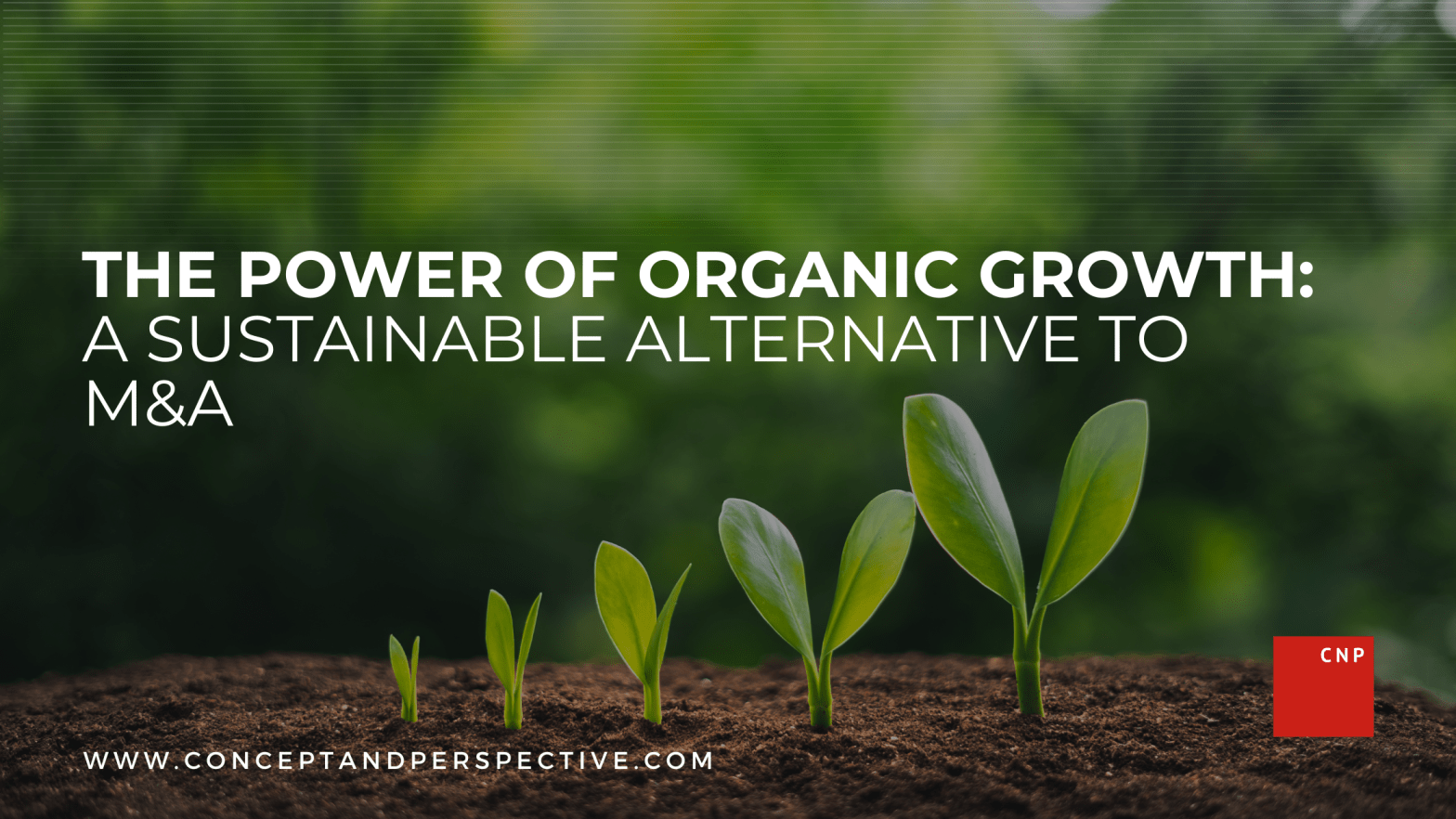
Chasing Corporate Growth
In the dynamic and fiercely competitive world of business, pursuing growth has become imperative for most businesses. Companies of all sizes strive to expand their operations and reach new markets. Mergers and acquisitions (M&A) hold the allure of rapid growth making it the go-to growth tool for many companies, but M&A is also complex, risky, and time-consuming. An acquisitive growth strategy should not, we argue here, be at the expense of organic growth which is a more sustainable and strategic tool that can be used to drive expansion.
The M&A Frenzy
Abigail Johnson, president and CEO of Fidelity Investment famously said that “Returns Matter a lot. It’s our capital.”
Driven by the pressure for (and sometimes the allure of) accelerated growth, many businesses prioritize M&A as the primary means of expansion. According to EY’s most recent CEO survey, 64% of US CEOs plan to pursue a deal in the next 12 months. Despite a marked downturn in acquisition activity, M&A data platform Pitchbook is tracking more than 30,000 deals consummated globally in Q3 2023 (see report).
But it’s important to recognize the realities of M&A… Acquisitions are complex and time-consuming, and their long-term success rate is relatively low.
The Reality of M&A Timelines and Limited Choice
M&A is often perceived as a fast-track route to market expansion and revenue growth. However, actual timelines and success rates often contradict this notion.
It can take a buyer many months – sometimes years – to identify a suitable target, even before the long work of negotiating and executing a deal commences. This transaction phase can be time-consuming, with legal and regulatory hurdles and unexpected delays being common. It is important to recognize that the expected revenue infusion will not always materialize quickly.
And deal-making is not a retail shopping experience where the buyer gets to freely pick and choose the company that it wants to acquire! If anything, M&A is like shopping in a Soviet-era supermarket where pickings are slim, and the buyer is often required to go home empty-handed or settle for buying something that it can (hopefully) fashion to fit its needs. The ‘perfect’ acquisition target is rarely sitting waiting ready to be acquired; if it is, it will often not be at a price palatable to the buyer.
Mismatched Acquisitions and Overpayment
Even when buyers successfully acquire a target, the deal often doesn’t deliver the intended benefits. A study by L.E.K. Consulting found that 60% of acquisitions destroy shareholder value. Financial returns are at the forefront of shareholder and management minds. However, the chance of realizing significant ‘value’ from a transaction is often undermined by the buyer overpaying, often due to overestimating post-acquisition growth and potential cost/revenue synergies that might be achieved between the buyer and its target.
In addition to the challenge of attaining a deal’s financial objectives, post-merger integration can also pose significant cultural and operational headaches. Combining two companies with different cultures and ways of working can be difficult and disruptive. It can take many months or sometimes years to fully realize the benefits of a deal. Many a buyer has purchased a business that turned out to be a mismatch for their existing operations, resulting in post-acquisition integration headaches. The ‘cost’ of finding this out is not just the wasted investment in a failed deal, it is the opportunity cost to the buyer, whose scarce resources could have been directed are more fruitful growth initiatives.
The Power of Organic Growth

At the risk of stating the obvious, M&A is not the only ‘tool’ in the corporate growth toolbox. Other inorganic growth paths include strategic alliances, licensing and franchising, joint ventures, and the injection of additional capital into the buyer’s business. All of these should be under regular consideration… as should organic growth modes.
Organic growth is the process of growing a business from within, through internal initiatives such as developing new products and services, expanding into new markets, and increasing sales to existing customers. It is often a more sustainable and less risky approach to growth than M&A.
Organic growth offers several compelling benefits:
- Tailored growth: Organic growth allows companies to build precisely what they need, where, and when they want it. This approach empowers companies to develop their unique growth trajectory.
- Cost-efficiency: Organic growth typically requires a fraction of the investment compared to M&A. Acquiring companies can incur hefty transaction costs, including legal fees, due diligence, and integration expenses.
- Avoiding integration risks: Post-merger integration is notoriously challenging to get right. Organic growth, on the other hand, leapfrogs these integration risks, allowing a company to evolve seamlessly without the disruptions associated with M&A.
- Sustainable growth: Organic growth is driven by internal factors, such as innovation, customer acquisition, and operational efficiency. This makes it a more sustainable approach to growth than M&A, which is often reliant on external factors, such as the availability of attractive acquisition targets and market conditions.
Building Your Organic Growth Engine
Building a successful organic growth engine requires the development of certain skills & competencies: strategic planning, talent development, market research, business agility, and the ability to track success.
Key steps include:
- Formulate a clear organic growth strategy aligned with long-term objectives. This strategy should identify the key growth areas where the company has the greatest competitive advantage and the highest potential for success.
- Invest in talent that drives innovation and collaboration. Organic growth relies on the ability to generate new ideas and bring them to market quickly. Companies need to create a culture that fosters creativity and collaboration, and they need to invest in the right talent to execute their growth strategy.
- Conduct market research to identify opportunities. Organic growth requires a deep understanding of the customer and the competitive landscape. Companies need to conduct regular market research (including feedback from customers) to stay ahead of the curve and identify new growth opportunities.
- Embrace adaptability, experimentation, and problem-solving. The business landscape is constantly evolving, so companies need to be agile and adaptable to change.
- Collect data that can track progress. Implement KPIs to measure the effectiveness of growth initiatives.
By following these steps, companies can embrace a holistic approach to sustainable growth that will help them achieve their long-term goals.
“In my years of advising and working with services firms, I have seen M&A fail time and again due to undisciplined planning, integration challenges, talent losses, and unrealized synergies. Organic growth takes more patience but builds specialized capabilities and flawless execution that afford true competitive advantage. The common culprit was impatience for instant gratification often driven by the thirst to meet Wall Street targets for shareholders.”
Kader Dicko
Founder & Managing Consultant
MARS Consulting & Advisory LLC
In addition to driving growth, building organic growth capability offers several ancillary benefits:
- It gives companies a deeper understanding of their customers and markets. This understanding is essential for developing new products and services that meet customer needs and for expanding into new markets.
- It allows them to build a stronger brand identity and reputation. A strong brand is essential for attracting and retaining customers, as well as for recruiting top talent.
- It creates a more engaged and motivated workforce. Employees are more likely to be engaged and motivated when they are working on projects that they believe will contribute to the long-term success of the company and are passionate about.
- When developed in conjunction with an M&A program, these skills are likely to improve the chance of successfully acquire.
Organic growth is a more sustainable and strategic approach to growth. Companies that invest in developing an organic growth engine are poised for long-term success in an evolving business landscape. By focusing on organic growth, companies can build a more sustainable and resilient business foundation that is better equipped to weather the inevitable ups and downs of the market.
Conclusion
While M&A promises a quick route to growth, its risks make it less than ideal for sustainable expansion. It’s time for companies to embrace a holistic approach to sustainable growth. This means championing both organic and inorganic growth strategies; for many, it will mean prioritizing organic growth ahead of M&A. By investing in the right people, processes, and technologies, companies can build a strong organic growth engine that will drive long-term success.
Do you have questions about your company’s growth capabilities or strategies for organic growth? Unsure what’s the right balance between M&A and organic growth? Reach out today to discuss.

 Concept and Perspective